


War in The Middle East
- dconsulting123
- Mar 1
- 2 min read
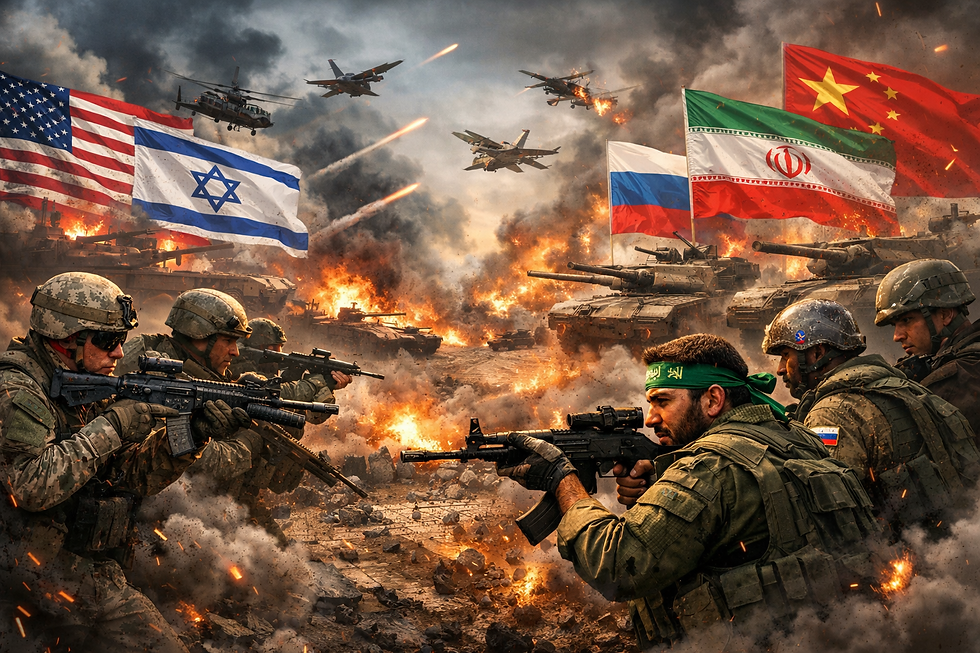
In early 2026, Iran has been caught in one of the most severe crises of its modern history. Deep economic issues and widespread dissatisfaction with the government led to massive protests across the country in January, particularly on 8–9 January, when millions of people took to the streets in cities like Tehran and Mashhad, calling for political change and freedom from authoritarian rule. These protests were part of a larger movement demanding reforms and greater rights after years of repression by the Islamic Republic’s security forces. Estimates suggest thousands of civilians were killed in violent crackdowns by state forces, which also included mass arrests and brutal suppression of dissent. The government responded with a near-total internet blackout to limit communications and external visibility of the unrest.
The situation escalated dramatically on February 28, 2026, when the United States and Israel launched a major military offensive against Iran, described by President Donald Trump as an effort to end Iran’s nuclear threat and bring “freedom” for the Iranian people. Israeli strikes hit key targets in Tehran, reportedly killing Iran’s Supreme Leader Ayatollah Ali Khamenei, which triggered retaliatory attacks by Iran on Israeli and U.S. positions in the region. This marked the beginning of a broader conflict with widespread regional implications.
Inside Iran, many citizens reacted with mixed emotions—some feared foreign intervention and further bloodshed, while others saw it as a possible turning point toward ending decades of authoritarian rule. Opposition figures outside Iran, including exiled leader Reza Pahlavi, have expressed support for moves that they believe could weaken the ruling regime and open space for democratic change.
This turmoil, driven by domestic dissent and now intertwined with a regional military c


